Publications
Links point to the published version and, whenever one exists, to a freely accessible version: preprint, author’s accepted manuscript or open repository copy (found through OpenAlex/Unpaywall). marks an open-access version.
Published and forthcoming
-
2026One Sentence at a Time: A Quantitative History of Rationality in Economic ThoughtForthcomingEuropean Journal for the History of Economic Thought
Abstract
This article demonstrates how unsupervised quantitative methods can enrich the history of economic thought. Using the largest English-language corpus ever assembled for the field—nearly 260,000 economics journal articles from 1900 to 2009 with citation data—we analyze the evolution of the concept of rationality. Combining large language model–based semantic analysis with bibliometric and network methods, we identify and cluster discussions of rationality across time and scales, such as the emergence of a social view of rationality, the circulation of bounded rationality, and the emergence of behavioral economics. We provide an open-source interactive tool to support transparency and reuse.
Cite
APADelcey, T., Goutsmedt, A., & Truc, A. (in press). One Sentence at a Time: A Quantitative History of Rationality in Economic Thought. European Journal for the History of Economic Thought. https://doi.org/10.1080/09672567.2026.2698470
BibTeX@article{delceyHistory2025, title = {One {{Sentence}} at a {{Time}}: {{A Quantitative History}} of {{Rationality}} in {{Economic Thought}}}, author = {Delcey, Thomas and Goutsmedt, Aurélien and Truc, Alexandre}, date = {2026}, journaltitle = {European Journal for the History of Economic Thought}, volume = {Forthcoming}, doi = {10.1080/09672567.2026.2698470}, langid = {english} } -
2026Economists, Economic Knowledge, and Central BanksForthcomingCambridge University Press, Cambridge Elements
Abstract
What do economists do in central banks? Why do central banks hire economists? This book investigates the evolving role of economists and economic knowledge within central banks, arguing that their current centrality is neither self-evident nor historically inevitable. While the presence and influence of economists in central banks today may seem natural, this book shows that it is the result of a complex, gradual, and uneven historical process shaped by institutional structures, disciplinary transformations, and shifting relationships between science and policy. Drawing on a rich but dispersed body of literature, the book traces how economists progressively gained authority through the establishment of statistics departments, the adoption of macroeconometric models, and the emergence of a shared cognitive infrastructure between academia and central banks. Rather than focusing on individuals or doctrines, it examines general trends and institutional shifts across a series of national case studies to show how central banks function as boundary organizations, at the intersection of policy and science.
Cite
APAGoutsmedt, A., Acosta, J. C., & Sergi, F. (in press). Economists, Economic Knowledge, and Central Banks. Cambridge University Press, Cambridge Elements. https://osf.io/preprints/socarxiv/acymv_v1
BibTeX@book{goutsmedtEconomists2026, title = {Economists, {{Economic Knowledge}}, and {{Central Banks}}}, author = {Goutsmedt, Aurélien and Acosta, Juan Carlos and Sergi, Francesco}, date = {2026}, volume = {Forthcoming 2026}, publisher = {Cambridge University Press, Cambridge Elements}, location = {Cambridge (UK)}, url = {https://osf.io/preprints/socarxiv/acymv_v1} } -
2026A History of MacroeconomicsForthcomingCambridge University Press, Elements
Abstract
This book offers a history of macroeconomics (the study of “the economy” as a whole) from its inception in the interwar period to today. Its novelty is twofold: it goes beyond a history of theories to cover a wider range of macroeconomists’ practices; it relies on a growing body of historical research, challenging misconceptions commonly disseminated in macroeconomics textbooks. This is not “yet another history of macroeconomics”. It is one that should strike scholars and students in macroeconomics as novel. Such a history is needed because macroeconomics textbooks project a particular “identity” of the field, derived from a specific historical narrative, in which the field evolved through theoretical “revolutions” and “battles” between “schools of thought” initiated by “great men”. We argue that this misrepresents the actual dynamics of macroeconomics. Our history conveys a different perspective, highlighting a more diverse set of characteristics (what macroeconomics is about) and practices (what macroeconomists do). We emphasise how macroeconomics has always relied on the combination of research agendas (theoretical, mathematical, empirical, and computational); how the interaction with other fields (notably microeconomics and econometrics) has been constant; and how the field has been shaped by a cast of researchers with diverse geographical and institutional origins (some working within academia, others in policymaking institutions and private organisations). We bring these many dimensions together through a simple chronology outlining four periods: birth (1920s-1940s), bridges (1950s-1960s), frictions (1970s-1980s), and constellations (1990s-2000s).
Cite
APASergi, F., Cherrier, B., Saidi, A., Duarte, P. G., Goutsmedt, A., Renault, M., & Acosta, J. C. (in press). A History of Macroeconomics. Cambridge University Press. https://doi.org/10.31235/osf.io/2suyd_v1
BibTeX@book{sergiHistory2026, title = {A {{History}} of {{Macroeconomics}}}, author = {Sergi, Francesco and Cherrier, Béatrice and Saidi, Aurélien and Duarte, Pedro Garcia and Goutsmedt, Aurélien and Renault, Matthieu and Acosta, Juan Carlos}, date = {2026}, series = {Elements}, volume = {Forthcoming 2026}, publisher = {Cambridge University Press}, location = {Cambridge (UK)} } -
2025
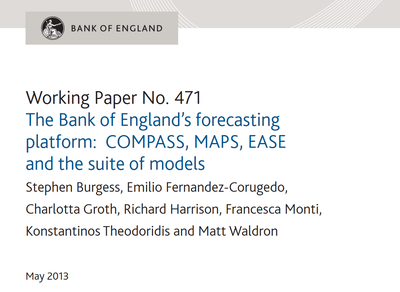 To Change or Not to Change: The Evolution of Forecasting Models at the Bank of EnglandJournal of Economic Methodology 32(2): 66–86
Abstract
Why do policymakers and economists within a policymaking institution choose to throw away a model and to develop an alternative one? Why do they choose to stick to an existing model? This article contributes to the literature on the history and philosophy of modelling by answering these questions. It delves into the dynamics of persistence, change, and building practices of macroeconomic modelling, using the case of forecasting models at the Bank of England (1974–2014). Based on archives and interviews, we document the multiple factors at play in model building and model change. We identify three sets of factors: the agency of modellers, institutional factors, and the material factor. Our investigation shows the diversity of explanations behind the decision to change a model: each time, model replacement resulted from a different combination of the three types of factors.
Cite
APAGoutsmedt, A., Sergi, F., Cherrier, B., Claveau, F., Fontan, C., & Acosta, J. (2025). To Change or Not to Change: The Evolution of Forecasting Models at the Bank of England. Journal of Economic Methodology, 32(2), 66–86. https://doi.org/10.1080/1350178X.2024.2303113
BibTeX@article{goutsmedtChange2025, title = {To {{Change}} or {{Not}} to {{Change}}: {{The Evolution}} of {{Forecasting Models}} at the {{Bank}} of {{England}}}, author = {Goutsmedt, Aurélien and Sergi, Francesco and Cherrier, Béatrice and Claveau, François and Fontan, Clément and Acosta, Juan}, date = {2025}, journaltitle = {Journal of Economic Methodology}, volume = {32}, number = {2}, pages = {66--86}, doi = {10.1080/1350178X.2024.2303113}, url = {https://doi.org/10.1080/1350178X.2024.2303113} } -
2025Redefining Scientization: Central Banks Between Science and PoliticsFinance and Society 11(2): 209–229
Abstract
This article introduces a new conceptual framework for examining the transformation of central banks’ activities at the intersection of science and politics. It builds on the results of the contributions gathered in this special section on the scientization of central banking, to which this article also provides an introduction. We start with an analysis of Martin Marcussen’s concept of ‘scientization’, originally formulated to describe the changes within central banks since the 2000s. After highlighting how Marcussen’s concept has raised different interpretations, we broaden our scope to examine how ‘scientization’ is applied in the wider social sciences, extending beyond the study of central banks. This brings to the fore two ideas: scientization as ‘boundary work’ (redrawing the line between ‘science’ and ‘non-science’) happening both in the public-facing (‘frontstage’) and internal (‘backstage’) activities of organizations. Finally, we suggest how these two ideas can be used to reinterpret ‘scientization’ of central banks as the emergence of central banks as ‘boundary organizations’. This reframing allows us to untangle and clarify the phenomena previously conflated under the original concept of scientization, offering a more coherent framework for ongoing research on central banks.
Cite
APAGoutsmedt, A., & Sergi, F. (2025). Redefining Scientization: Central Banks Between Science and Politics. Finance and Society, 11(2), 209–229. https://doi.org/10.1017/fas.2025.7
BibTeX@article{goutsmedtRedefining2025, title = {Redefining {{Scientization}}: {{Central Banks Between Science}} and {{Politics}}}, shorttitle = {Redefining {{Scientization}}}, author = {Goutsmedt, Aurélien and Sergi, Francesco}, date = {2025}, journaltitle = {Finance and Society}, volume = {11}, number = {2}, pages = {209--229}, issn = {2059-5999}, doi = {10.1017/fas.2025.7}, url = {https://www.cambridge.org/core/journals/finance-and-society/article/redefining-scientization-central-banks-between-science-and-politics/C32D47D0880577CC063D27EC0002E881}, langid = {english} } -
2025Not a Steamroller, a 3D Process: Scientization at the Bank of EnglandFinance and Society 11(2): 230–252
Abstract
This article investigates the scientization process in central banks, using the Bank of England (BoE) as a case study. Its main goal is to clarify the interactions and tensions among three dimensions of scientization: contributory, policymaking and legitimizing. To do so, we outline an ideal type of contributory scientization in central banks, whereby they become active contributors to science. The article derives empirically observable characteristics for this ideal type, regarding leadership and staff profiles, use of internal resources, composition of external networks, and publication and discursive outputs. The BoE is then contrasted to this ideal type of a central bank thoroughly involved in contributory scientization. The empirical material includes archives and interviews as well as three databases providing quantitative information from the 1970s to 2019. We find that the development of contributory scientization is strategically motivated, often generating tensions with policymaking and legitimizing dimensions. Our findings suggest that scientization in central banks is best understood as a three-dimensional, non-linear process, rather than a steamroller.
Cite
APAGoutsmedt, A., Sergi, F., Claveau, F., & Fontan, C. (2025). Not a Steamroller, a 3D Process: Scientization at the Bank of England. Finance and Society, 11(2), 230–252. https://doi.org/10.1017/fas.2025.8
BibTeX@article{goutsmedtNot2025, title = {Not a Steamroller, a {{3D}} Process: {{Scientization}} at the {{Bank}} of {{England}}}, shorttitle = {Not a Steamroller, a {{3D}} Process}, author = {Goutsmedt, Aurélien and Sergi, Francesco and Claveau, François and Fontan, Clément}, date = {2025}, journaltitle = {Finance and Society}, volume = {11}, number = {2}, pages = {230--252}, issn = {2059-5999}, doi = {10.1017/fas.2025.8}, url = {https://www.cambridge.org/core/journals/finance-and-society/article/not-a-steamroller-a-3d-process-scientization-at-the-bank-of-england/8504BD2CFAEEE9C7286558966D007002}, langid = {english} } -
2025
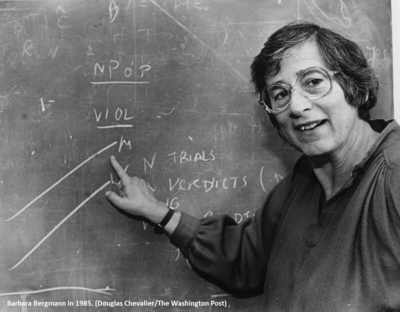 Modelling Intervention: Barbara Bergmann’s Micro-to-Macro Simulation ProjectsEuropean Journal for the History of Economic Thought 32(3): 342–362
Abstract
Over a period of twelve years, Barbara Bergmann developed several models of the labor market using microsimulation, eventually integrated in a "Transactions Model" of the entire US economy, built with Robert Bennett and published in 1986. The paper reconstructs the history of this modelling enterprise in the context of the debates on the microfoundations of macroeconomics and the role of macroeconomic expertise from the 1970s stagflation to the late 1980s. It shows how a political element-her focus on distributional effects of policies-was central to her criticism of macroeconomic modelling and how both her epistemic and political positions were increasingly marginalized in the 1980s.
Cite
APAChassonnery-Zaigouche, C., & Goutsmedt, A. (2025). Modelling Intervention: Barbara Bergmann’s Micro-to-Macro Simulation Projects. European Journal for the History of Economic Thought, 32(3), 342–362. https://doi.org/10.1080/09672567.2024.2433971
BibTeX@article{chassonnery-zaigoucheModelling2025, title = {Modelling Intervention: {{Barbara Bergmann}}’s Micro-to-Macro Simulation Projects}, author = {Chassonnery-Zaigouche, Cléo and Goutsmedt, Aurélien}, date = {2025}, journaltitle = {European Journal for the History of Economic Thought}, volume = {32}, number = {3}, pages = {342--362}, doi = {10.1080/09672567.2024.2433971}, url = {https://osf.io/preprints/socarxiv/ynmbe} } -
2025La BCE Face à Ses Monstres : Les Transformations Du Cadrage de La Stabilité Des Prix (1998-2023)Revue Française D'histoire Économique 23
Abstract
Cet article analyse les transformations du cadrage de la stabilité des prix par la Banque centrale européenne (BCE) depuis sa création en 1998 jusqu'à aujourd'hui. En s'appuyant sur une méthode de topic modeling, nous examinons 817 discours des membres du directoire de la BCE, en nous concentrant sur leurs discussions autour de l'« inflation » et de la « stabilité des prix » à travers trois périodes clés : l'ère de la banque centrale indépendante (BCI, 1998-2011), la période de stagnation séculaire ( 2011-2021) et le retour de l'inflation (2021-2023). Nos résultats montrent qu'à ses débuts, la BCE a construit sa légitimité autour d'un cadrage centré sur le contrôle de l'inflation, en mobilisant les principes du modèle de la BCI : crédibilité anti-inflationniste et priorité absolue à la stabilité des prix. Cependant, la crise financière de 2007-2009 et ses répercussions, combinées à de nouveaux défis tels que l'instabilité financière et les risques climatiques, ont conduit la BCE à élargir son cadre d'action. En 2021, elle a institutionnalisé son nouveau cadrage de l'inflation en intégrant les enjeux climatiques et une cible d'inflation symétrique à sa stratégie monétaire Toutefois, la résurgence de l'inflation depuis 2021 a mis ce nouveau cadrage à l'épreuve, forçant la BCE à jongler entre les principes fondamentaux du modèle CBI et les changements qui y ont été apportés depuis la crise. Cette stratégie révèle les tensions qui sous-tendent la légitimation de sa politique monétaire face aux défis écologiques et géopolitiques actuels.
Cite
APAGoutsmedt, A., & Fontan, C. (2025). La BCE Face à Ses Monstres : Les Transformations Du Cadrage de La Stabilité Des Prix (1998-2023). Revue Française D'histoire Économique, 23. https://dial.uclouvain.be/pr/boreal/object/boreal:306437
BibTeX@article{goutsmedtBCE2025, title = {La {{BCE}} Face à Ses Monstres : Les Transformations Du Cadrage de La Stabilité Des Prix (1998-2023)}, shorttitle = {La {{BCE}} Face à Ses Monstres}, author = {Goutsmedt, Aurélien and Fontan, Clément}, date = {2025}, journaltitle = {Revue Française D'histoire Économique}, shortjournal = {Rev. Fr. hist. Écon.}, volume = {23}, issn = {2427-4062}, url = {https://dial.uclouvain.be/pr/boreal/object/boreal:306437}, langid = {english} } -
2024
 The ECB and the Inflation Monsters: Strategic Framing and the Responsibility Imperative (1998-2023)Journal of European Public Policy 31(4): 999–1025
Abstract
The recent resurgence of inflation in Europe has led the ECB to increase interest rates and phase out asset purchase programmes designed to address the effects of the Great Financial Crisis. This article investigates how the ECB has adjusted its logic of responsibility throughout this series of crises. Using a topic model and in-depth analysis of speeches, we examine the ECB’s strategic framing of linkages related to inflation during three historical periods: the Central Bank Independence (CBI) era (1998–2011), the secular stagnation era (2011–2021), and the new inflation era (2021-). Our findings indicate that modifications made to the CBI’s linkages during the secular stagnation era shaped the ECB’s framing of the new inflation era in a novel way. However, despite acknowledging difficult policy tradeoffs, which they used to downplay in the past, ECB policymakers have continued to reframe its initial imperative of responsibility in the hope of avoiding policy discussions on regime change.
Cite
APAGoutsmedt, A., & Fontan, C. (2024). The ECB and the Inflation Monsters: Strategic Framing and the Responsibility Imperative (1998-2023). Journal of European Public Policy, 31(4), 999–1025. https://doi.org/10.1080/13501763.2023.2281583
BibTeX@article{goutsmedtECB2024, title = {The {{ECB}} and the Inflation Monsters: Strategic Framing and the Responsibility Imperative (1998-2023)}, author = {Goutsmedt, Aurélien and Fontan, Clément}, date = {2024}, journaltitle = {Journal of European Public Policy}, volume = {31}, number = {4}, pages = {999--1025}, doi = {10.1080/13501763.2023.2281583} } -
2024
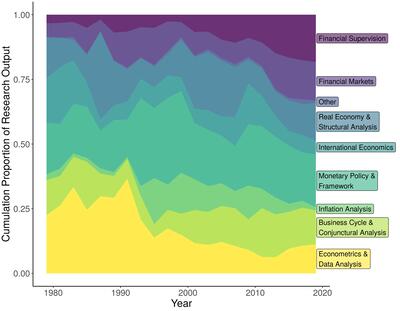 Six Decades of Economic Research at the Bank of EnglandHistory of Political Economy 56(1): 1–40
Abstract
This paper discusses the transformation of the content, role, and status of economic research at the Bank of England in the past sixty years. We show how three factors (the policy functions and missions of the Bank, the attitude of its executives toward economics, and its organizational structure) shaped the evolution of in-house economic research at the Bank during three distinctive periods (1960–91; 1992–2007; 2007–14). Our account relies on a broad set of sources and methods (the Bank's publications, archives, interviews with current and former Bank economists, citation analysis, prosopography, and topic modeling).
Cite
APAAcosta, J., Cherrier, B., Claveau, F., Fontan, C., Goutsmedt, A., & Sergi, F. (2024). Six Decades of Economic Research at the Bank of England. History of Political Economy, 56(1), 1–40. https://doi.org/10.1215/00182702-10956544
BibTeX@article{acostaSix2024, title = {Six {{Decades}} of {{Economic Research}} at the {{Bank}} of {{England}}}, author = {Acosta, Juan and Cherrier, Beatrice and Claveau, François and Fontan, Clément and Goutsmedt, Aurélien and Sergi, Francesco}, date = {2024}, journaltitle = {History of Political Economy}, shortjournal = {History of Political Economy}, volume = {56}, number = {1}, pages = {1--40}, issn = {0018-2702}, doi = {10.1215/00182702-10956544}, url = {https://read.dukeupress.edu/hope/article/doi/10.1215/00182702-10956544/382434/Six-Decades-of-Economic-Research-at-the-Bank-of} } -
2023Quantitative and Computational Approaches in the Social Studies of EconomicsOEconomia - History, Methodology, Philosophy 13(2): 147–161
Abstract
This special issue presents a diverse set of scholarly contributions that apply quantitative and computational methods to questions that fall within the broad scope of the social studies of economics. The main aim of putting the contributions together is to showcase these methods and their potential to help generate novel insights and new accounts about economics as a scientific discipline embedded in a social context, about its evolution over time, and about its role in policymaking. The special issue contains ten contributions that apply a variety of methods, illustrate different ways in which they can be put to use, and offer an overview of the kinds of data they help analyze.
Cite
APAGoutsmedt, A., Claveau, F., & Herfeld, C. (2023). Quantitative and Computational Approaches in the Social Studies of Economics. OEconomia - History, Methodology, Philosophy, 13(2), 147–161. https://doi.org/10.4000/oeconomia.15799
BibTeX@article{goutsmedtQuantitative2023, title = {Quantitative and {{Computational Approaches}} in the {{Social Studies}} of {{Economics}}}, author = {Goutsmedt, Aurélien and Claveau, François and Herfeld, Catherine}, date = {2023}, journaltitle = {OEconomia - History, Methodology, Philosophy}, volume = {13}, number = {2}, pages = {147--161}, doi = {https://journals.openedition.org/oeconomia/15799}, url = {https://journals.openedition.org/oeconomia/15799} } -
2023
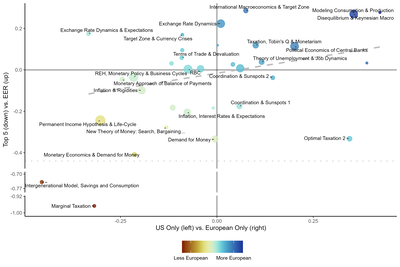 An Independent European Macroeconomics? A History of European Macroeconomics through the Lens of the European Economic ReviewEuropean Economic Review 158: 104559
Abstract
Economics in Europe has become more international since the 1970s. To a certain extent, this internationalisation is also an ‘Americanisation’ as many European economists have adopted the standards and approaches of US economics. This prompts an important question: amidst this convergence, are there any fields that have managed to retain a distinctively European character? In this article, we use topic modelling and bibliometric coupling to identify European specialties between 1969 and 2002. We focus on macroeconomic articles published in the European Economic Review and compare their bibliographic references and textual content to what has been published in the top 5 journals. Despite economics internationalization since the 1970s, European macroeconomics displayed distinct characteristics across two distinct periods. In the late 1970s and early 1980s, European macroeconomists maintained a certain distance from US debates centred around rational expectations and new classical economics. However, they embraced the concept of microfoundations through the lens of disequilibrium theory, fostering transnational collaborations and offering a unique framework for addressing various macroeconomic issues. Nevertheless, both the prominence of new classical economics in the US and the decline of the disequilibrium approach after the mid-1980s, European macroeconomics shifted towards closer alignment with US approaches. In the 1990s, Political economy, inspired by pioneering US contributions like Kydland and Prescott (1977) and Barro and Gordon (1983a,b), emerged in the 1990s as a new framework offering a common language for many European macroeconomists. However, specific European challenges like high unemployment rates and European integration continued to drive research in distinctive directions.
Cite
APAGoutsmedt, A., & Truc, A. (2023). An Independent European Macroeconomics? A History of European Macroeconomics through the Lens of the European Economic Review. European Economic Review, 158, 104559. https://doi.org/10.1016/j.euroecorev.2023.104559
BibTeX@article{goutsmedtIndependent2023, title = {An {{Independent European Macroeconomics}}? {{A History}} of {{European Macroeconomics}} through the {{Lens}} of the {{European Economic Review}}}, author = {Goutsmedt, Aurélien and Truc, Alexandre}, date = {2023}, journaltitle = {European Economic Review}, volume = {158}, pages = {104559}, doi = {10.1016/j.euroecorev.2023.104559}, url = {https://www.sciencedirect.com/science/article/pii/S0014292123001873} } -
2022
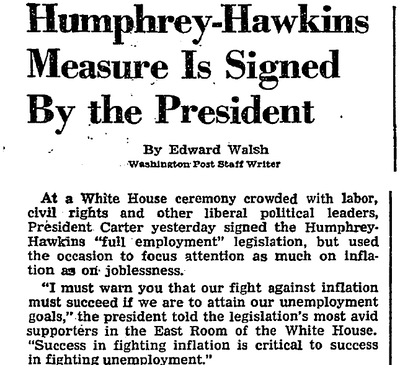 How the Phillips Curve Shaped Full Employment Policy in the 1970s: The Debates on the Humphrey-Hawkins ActHistory of Political Economy 54(4): 619–653
Abstract
This article relates the history of economists' influence in shaping the content of the Humphrey-Hawkins Act (1978) and its immediate consequences. The act committed the federal government to reducing unemployment to 4 percent and inflation to 3 percent as soon as 1983. Initially, the Humphrey-Hawkins bill was conceived as a project to favor the economic integration of African Americans and economic planning and targeted only the unemployment rate. Republican senators successfully pushed for adding a numerical inflation target during the debates in Congress. The act eventually put on equal footing inflation and unemployment. This article argues that the economists in the Carter administration, and notably the Council of Economic Advisers, were instrumental, even if unintentionally, in favoring the integration of an inflation target and such an interpretation of the bill. In the negotiations that opposed them to the supporters of the bill, as well as in the analysis of the bill they produced, they insisted on the existence of a trade-off between inflation and unemployment and referred frequently to the famous Phillips curve. They endeavored to anchor their expertise on academic publications, which strengthened the role of the Phillips curve in shaping the debates. Business organizations and senators used references to the trade-off to undermine the bill and favor the integration of an inflation target.
Cite
APAGoutsmedt, A. (2022). How the Phillips Curve Shaped Full Employment Policy in the 1970s: The Debates on the Humphrey-Hawkins Act. History of Political Economy, 54(4), 619–653. https://doi.org/10.1215/00182702-9895846
BibTeX@article{goutsmedtHow2022, title = {How the {{Phillips Curve Shaped Full Employment Policy}} in the 1970s: The {{Debates}} on the {{Humphrey-Hawkins Act}}}, author = {Goutsmedt, Aurélien}, date = {2022}, journaltitle = {History of Political Economy}, volume = {54}, number = {4}, pages = {619--653}, doi = {https://read.dukeupress.edu/hope/article-abstract/54/4/619/300514/How-the-Phillips-Curve-Shaped-Full-Employment?redirectedFrom=fulltext} } -
2021
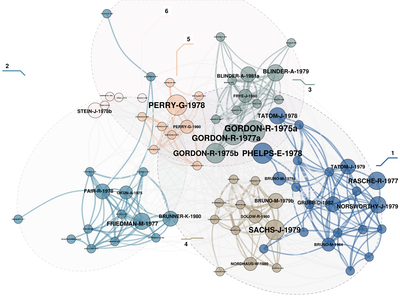 From the Stagflation to the Great Inflation: Explaining the US Economy of the 1970sRevue d'Economie Politique 131(3): 557–582
Abstract
This article proposes a history of the evolution of macroeconomists’ explanations of the 1970s US stagflation, from 1975 to 2013. Using qualitative and quantitative methods, 1) I observe the different types of explanations coexisting at different periods; 2) I assess which was the dominant type of explanations for each period; and 3) I identify the main sources of influence for the different types of explanations. In the late 1970s and early 1980s, supply-shocks and inflation inertia were fundamental concepts to explain stagflation. The interest for this topic progressively vanished after 1985. In the 1990s, it was a totally new literature that emerged almost without any reference to past explanations. This literature focused on the role played by monetary policy in the late 1960s and the 1970s to account for the rise of inflation. New Classical economists’ contributions, like Lucas [1976] or Kydland and Prescott [1977], which were ignored by stagflation explanations in the 1970s/1980s, became major references to account for the 1970s stagflation in the 1990s.
Cite
APAGoutsmedt, A. (2021). From the Stagflation to the Great Inflation: Explaining the US Economy of the 1970s. Revue d'Economie Politique, 131(3), 557–582. https://www.cairn.info/revue-d-economie-politique-2021-3-page-557.htm?ref = doi
BibTeX@article{goutsmedtStagflation2021, title = {From the {{Stagflation}} to the {{Great Inflation}}: {{Explaining}} the {{US}} Economy of the 1970s}, author = {Goutsmedt, Aurélien}, date = {2021}, journaltitle = {Revue d'Economie Politique}, volume = {131}, number = {3}, pages = {557--582}, doi = {https://www.cairn.info/revue-d-economie-politique-2021-3-page-557.htm?ref=doi} } -
2021
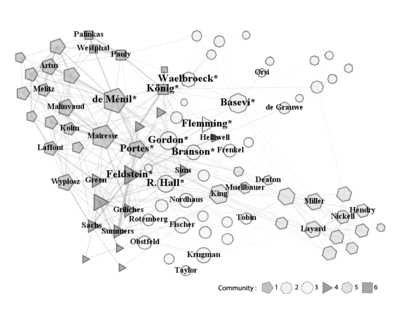 European Economics and the Early Years of the International Seminar on MacroeconomicsRevue d'Economie Politique 131(4): 693–722
Abstract
The International Seminar on Macroeconomics (ISoM) is an annual conference, which was co-sponsored during 15 years (1978-1993) by the French EHESS and the NBER. This article uncovers the scientific and institutional dynamics unrolling from this cooperation. We argue that macroeconomists gathered by the ISoM contributed greatly to the making of a European network of economists sharing similar professional and intellectual standards. We illustrate how the ISoM stood at the crossroad of two types of "internationalisation" of economics: the integration of European national communities and the process of "Americanisation" of economics. While existing literature on "internationalization" focuses on the national level, our contribution investigates the European level. Moreover, we unveil how two research programmes in macroeconomics (namely the disequilibrium theory and large-scale macroeconometric modelling) played a significant role in this process.
Cite
APAGoutsmedt, A., Renault, M., & Sergi, F. (2021). European Economics and the Early Years of the International Seminar on Macroeconomics. Revue d'Economie Politique, 131(4), 693–722. https://doi.org/10.3917/redp.314.0089
BibTeX@article{goutsmedtEuropean2021, title = {European {{Economics}} and the {{Early Years}} of the {{International Seminar}} on {{Macroeconomics}}}, author = {Goutsmedt, Aurélien and Renault, Matthieu and Sergi, Francesco}, date = {2021}, journaltitle = {Revue d'Economie Politique}, volume = {131}, number = {4}, pages = {693--722}, issn = {0373-2630}, doi = {https://www.cairn.info/revue-d-economie-politique-2021-4-page-693.htm}, langid = {english} } -
2019
 Reacting to the Lucas Critique: The Keynesians' Pragmatic RepliesHistory of Political Economy 51(3): 533–556
Abstract
In 1976, Robert Lucas explicitly criticized Keynesian macroeconometric models for their inability to correctly predict the effects of alternative economic policies. Today, most contemporary macroeconomists and some historians of economics consider that Lucas’s critique led forcefully to an immediate disqualification of the Keynesian macroeconometric approach. This narrative is based on the interpretation of the Lucas critique as a fundamental principle for economic reasoning that was (and still is) logically unquestionable. We consider that this narrative is problematic both in terms of historiography and the effects that it can have in the field as a way of assigning importance and credit to particular macroeconomists. Indeed, the point of view of the Keynesian economists is missing despite the fact that they were the target of Lucas’s paper and that throughout the 1970s and 1980s they produced a fierce reaction against it. In this article we analyze the reactions by a broad set of authors (which we label “Keynesians”) that disputed the relevance of the critique. In spite of their diversity in methodological, theoretical, and policy issues, these reactions were characterized by their common questioning of the empirical and practical relevance of the Lucas critique.
Cite
APAGoutsmedt, A., Pinzón-Fuchs, E., Renault, M., & Sergi, F. (2019). Reacting to the Lucas Critique: The Keynesians' Pragmatic Replies. History of Political Economy, 51(3), 533–556. https://doi.org/10.1215/00182702-7551912
BibTeX@article{goutsmedtReacting2019, title = {Reacting to the {{Lucas Critique}}: {{The Keynesians}}' {{Pragmatic Replies}}}, shorttitle = {Reacting to the {{Lucas Critique}}}, author = {Goutsmedt, Aurélien and Pinzón-Fuchs, Erich and Renault, Matthieu and Sergi, Francesco}, date = {2019}, journaltitle = {History of Political Economy}, volume = {51}, number = {3}, pages = {533--556}, doi = {https://read.dukeupress.edu/hope/article-abstract/51/3/535/137809/Reacting-to-the-Lucas-CritiqueThe-Keynesians?redirectedFrom=fulltext} } -
2019
 An Agenda without a Plan. Robert E. Lucas’s Trajectory through the Public DebateOEconomia - History, Methodology, Philosophy 9(2): 289–314
Abstract
This article explores Robert E. Lucas’s policy agenda and his engagement with the public debate between the 1970s and early 1980s. It investigates how he interacted with the public debate by envisioning key principles of his macroeconomic theory and methodology, and how he promoted his policy agenda. An exploration of Lucas’s personal and professional archives sheds light on his participation in policy debates after the publication of his works, illustrating how Lucas built a discreet and cautious way of engaging with the public. Lucas did not propose a detailed program to implement his policy agenda, nor was he actively promoting his policy agenda. The article suggests that Lucas’s originality compared to his contemporaries was his belief on the ability of macroeconomics to scientifically devise binding policy rules that could be integrated in an economic constitution.
Cite
APAGoutsmedt, A., Guizzo, D., & Sergi, F. (2019). An Agenda without a Plan. Robert E. Lucas’s Trajectory through the Public Debate. OEconomia - History, Methodology, Philosophy, 9(2), 289–314. https://doi.org/10.4000/oeconomia.5605
BibTeX@article{goutsmedtAgenda2019, title = {An Agenda without a Plan. {{Robert E}}. {{Lucas}}’s Trajectory through the Public Debate}, author = {Goutsmedt, Aurélien and Guizzo, Danielle and Sergi, Francesco}, date = {2019}, journaltitle = {OEconomia - History, Methodology, Philosophy}, volume = {9}, number = {2}, pages = {289--314}, doi = {https://journals.openedition.org/oeconomia/5605}, url = {https://journals.openedition.org/oeconomia/5605} } -
2018
 Thomas Sargent face à Robert Lucas : une autre ambition pour la Nouvelle Economie ClassiqueOEconomia - History, Methodology, Philosophy 8(2): 211–241
Abstract
The article shows that Sargent’s macroeconomic vision differs from Lucas' one. For the latter, the assumptions of a model are “un-realistic”, i.e., the model does not aim to represent reality. It is a simulation tool that allows the assessment of different economic policies. The “Lucasian” ideal is a macroeconomist, who is therefore destined to become an engineer in charge of providing public authorities with an “economic policy software”. The engineer uses this software to guide policymakers on a scientific basis. For its part, Sargent considers that in order to substitute the Keynesian paradigm, the new classical economics must be able to fulfill the same tasks. And one of these tasks is to advise public authorities by providing them with an interpretative framework for the economic and social phenomena and with intuitive tools to discuss the economic policies that will be set up. Sargent wants to apply what he calls the Rational Expectations Theory to a set of concrete events (Poincaré stabilization, German hyperinflation, Thatcher and Reagan policies) in order to demonstrate the relevance of this interpretative framework used to think about contemporary economic problems.
Cite
APAGoutsmedt, A. (2018). Thomas Sargent face à Robert Lucas : une autre ambition pour la Nouvelle Economie Classique. OEconomia - History, Methodology, Philosophy, 8(2), 211–241. https://doi.org/10.4000/oeconomia.3047
BibTeX@article{goutsmedtThomas2018, title = {Thomas Sargent face à Robert Lucas : une autre ambition pour la Nouvelle Economie Classique}, shorttitle = {Thomas Sargent face à Robert Lucas}, author = {Goutsmedt, Aurélien}, date = {2018}, journaltitle = {OEconomia - History, Methodology, Philosophy}, volume = {8}, number = {2}, pages = {211--241}, doi = {https://journals.openedition.org/oeconomia/3047}, langid = {french} } -
2018
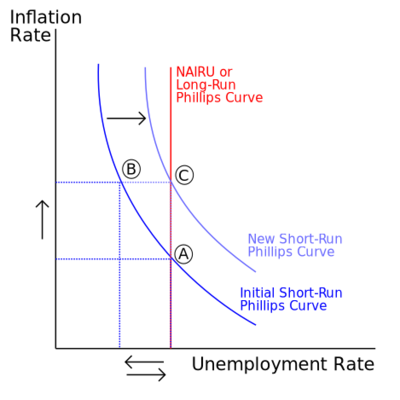 Robert J. Gordon and the Introduction of the Natural Rate Hypothesis in the Keynesian FrameworkHistory of Economic Ideas 26(3): 157–187
Abstract
This article studies the dissemination of the Natural Rate of Unemployment Hypothesis (NRH) in macroeconomics during the 1970s, by studying the reaction of Robert J. Gordon to the argument of Friedman (1968). In the early 1970s, Gordon opposed the NRH, arguing that the estimated parameter on expected inflation was below one. Confronting to new data and to rising inflation, Gordon adopted the NRH after 1973. Nevertheless, the adoption anticipated any clear empirical proof. We explain that this conversion was due to Friedman’s influence on Gordon, but also to the fact it did not prevent Gordon to support active stabilization policies.
Cite
APAGoutsmedt, A., & Rubin, G. (2018). Robert J. Gordon and the Introduction of the Natural Rate Hypothesis in the Keynesian Framework. History of Economic Ideas, 26(3), 157–187. https://doi.org/10.19272/201806103008
BibTeX@article{goutsmedtRobert2018, title = {Robert {{J}}. {{Gordon}} and the Introduction of the Natural Rate Hypothesis in the {{Keynesian}} Framework}, author = {Goutsmedt, Aurélien and Rubin, Goulven}, date = {2018}, journaltitle = {History of Economic Ideas}, volume = {26}, number = {3}, pages = {157--187}, doi = {https://www.torrossa.com/fr/resources/an/4461050?digital=true} }
Work in progress
-
2026Worlds behind Words: Text as Data for the History and Philosophy of EconomicsUnder contractCambridge University Press, Cambridge Elements
Cite
APACamilotto, N., Delcey, T., & Goutsmedt, A. (2026). Worlds behind Words: Text as Data for the History and Philosophy of Economics. Cambridge University Press, Cambridge Elements.
BibTeX@book{camilottoWorlds2026, title = {Worlds behind {{Words}}: {{Text}} as {{Data}} for the {{History}} and {{Philosophy}} of {{Economics}}}, author = {Camilotto, Nicolas and Delcey, Thomas and Goutsmedt, Aurélien}, date = {2026}, volume = {Under contract}, publisher = {Cambridge University Press, Cambridge Elements}, location = {Cambridge (UK)}, langid = {english} } -
2025Jacques Drèze and the European Commission: A Restless Voice for Full Employment (1985-1995)Workshop "Europe in Microscope"
Cite
APAGoutsmedt, A., & Renault, M. (2025). Jacques Drèze and the European Commission: A Restless Voice for Full Employment (1985-1995). Workshop "Europe in Microscope".
BibTeX@article{goutsmedtJacques2025, title = {Jacques {{Drèze}} and the {{European Commission}}: {{A Restless Voice}} for {{Full Employment}} (1985-1995)}, author = {Goutsmedt, Aurélien and Renault, Matthieu}, date = {2025}, journaltitle = {Workshop "Europe in Microscope"} }
Software and data
-
2025Digital History of MacroeconomicsZenodo
Abstract
Presentation of the Mapping Macroeconomics Project Aurélien Goutsmedt and Alexandre Truc/ Last compiled on 2021-03-17 What is the Mapping Macroeconomics Project The finished project: https://www.digitalhistoryofscience.org/dhm/ This project has received a grant from the History of Economics Sociey New Initiatives Fund.It is conducted by Aurélien Goutsmedt and Alexandre Truc.You can find a more in-depth presentation of the project here. It takes as a point of departure that economics has been characterized since the 1970s by an exponential increase in the number of articles published in academic journals. This phenomenon makes it harder for historians of economics to properly assess the trends in the transformation of economics, the main topics researched, the most influential authors and ideas, *etc*. As a result, historians of this period run the risk of relying, at least as first pass, on a presentist view of the history of ideas: what today’s economists consider as important contributions from the past and the most influential authors. When historians shield themselves from the retrospective views of the practising economists, they have to delve into the literature of the past that has been forgotten for the most part and to scrutinize the network of authors that are little known. This effort allows historians to correct the potted histories of the practising economists and to propose alternative narratives of the evolution of the discipline. However, the bigger the literature to be studied is, the harder the historians’ capacity to grasp the overall picture of the time. We agree with those who consider that developing collective quantitative tools could help historians to confront this challenge. The issues and uses of quantitative tools in history of economics have been the topic of many discussions in our field—see for instance Backhouse (1998), Claveau and Gingras (2016) and the~Journal of Economic Methodology special issue in 2018, in particular Edwards, Giraud, and Schinckus (2018) and Cherrier and Svorenčík (2018)—, but the technical barrier posed by the methods remains an obstacle for many historians. The challenges and opportunities that a quantitative history brings are particularly useful to the recent history of macroeconomics. Practising macroeconomists are eager to tell narratives of the evolution of their field that serve the purpose of intervening on current debates, by giving credit to particular authors and weight to specific ideas. Historians who go into this area find plenty of accounts by macroeconomists and have to handle the vast increase in the macroeconomic literature since the last quarter of the past century. Our goal is to build an online interactive platform displaying bibliometric data on a large set of macroeconomic articles. We aim at settling the basis for a broad and long-run project on the history of macroeconomics, as well as to bring to historians tools to run quantitative inquiries to support their own research work. Structure of the Github repository You will find in this repository all the R scripts used to build our data and analyses. 1_Corpus_creation You will find here all the scripts and documentation relative to the extraction of the JEL codes from Econlit and the matching with Web of Science database. It deals with generating the list of articles, references, authors, affiliations, etc. that will be used after. 2_Network_creation This directory gathers all the scripts and documentation for the first step of the project: Creating the list of networks and identifying communities Naming these communities Adding information about institutions 3_Analysis This~directory gathers the scripts to produce a report to analyze and understand our data 4_Platform_tables This directory gathers the scripts to produce all the necessary data and tables that are used in the online platform. 5_Writing Your will find here the documents to produce the technical documentation that is on the online platform. References Backhouse, Roger E. 1998. “The Transformation of U.S. Economics, 1920-1960, Viewed Through a Survey of Journal Articles.” History of Political Economy 30 (4): 85–107. Cherrier, Beatrice, and Andrej Svorenčík. 2018. “The Quantitative Turn in the History of Economics: Promises, Perils and Challenges.” Journal of Economic Methodology 0 (0): 1–11. Claveau, François, and Yves Gingras. 2016. “Macrodynamics of Economics: A Bibliometric History.” History of Political Economy 48 (4): 551–92. Edwards, José, Yann Giraud, and Christophe Schinckus. 2018. “A Quantitative Turn in the Historiography of Economics?” Journal of Economic Methodology 25 (4): 283–90.
Cite
APAGoutsmedt, A., & Truc, A. (2025). Digital History of Macroeconomics. Zenodo. https://doi.org/10.5281/zenodo.14627002
BibTeX@article{goutsmedtDigital2025, title = {Digital {{History}} of {{Macroeconomics}}}, author = {Goutsmedt, Aurélien and Truc, Alexandre}, date = {2025}, journaltitle = {Zenodo}, publisher = {Zenodo}, doi = {10.5281/zenodo.14627002}, url = {https://zenodo.org/records/14627002} } -
2025Becoming an Economist: A Database of French Economics PhDsDataset, Zenodo
Abstract
This database compiles information on Ph.D. dissertations in economics defended in France since 1900. See our companion website for news and full documentation. The French database is implemented as a relational database that integrates multiple interconnected data frames. It is organized around four main components: Thesis Metadata: This table contains the core information for each dissertation. Each entry corresponds to a single thesis and includes details such as the title, defense date, abstract, and other relevant metadata. Edges Data: This table captures the connections between the other three tables, linking individuals, institutions, and theses. It associates each thesis with the individuals and institutions involved in its production, thereby enabling a synthetized view of these relationships. The edges data are provided in two formats: (1) a ready-to-use format with cleaned and standardized information; and (2) a more ~ extensive format that allows for comparison between the original~ collected data and the results of the cleaning process. Institutions Data: This table includes information on universities, laboratories, doctoral schools, and other institutions associated with the dissertations. Each entry corresponds to a single institution. Individual Data: This table contains information on the individuals involved in the dissertations, including authors, supervisors, and jury members. Each entry corresponds to a single individual. The data used in this project comes from three mains sources:~ Theses.fr:~https://theses.fr/ Sudoc:~ https://www.sudoc.fr/ IdRef:~ https://www.idref.fr/] If you use our data or scripts, please cite the following reference: “Delcey Thomas, and Aurélien Goutsmedt. (2024). Becoming an Economist: A Database of French Economics PhDs. Zenodo. https://doi.org/10.5281/zenodo.14541427”
Cite
APADelcey, T., & Goutsmedt, A. (2025). Becoming an Economist: A Database of French Economics PhDs [Data set]. Zenodo. https://doi.org/10.5281/ZENODO.15270248
BibTeX@dataset{delceyBecoming2025, title = {Becoming an {{Economist}}: {{A Database}} of {{French Economics PhDs}}}, shorttitle = {Becoming an {{Economist}}}, author = {Delcey, Thomas and Goutsmedt, Aurélien}, date = {2025-04-23}, publisher = {Zenodo}, doi = {10.5281/ZENODO.15270248}, url = {https://zenodo.org/doi/10.5281/zenodo.15270248}, langid = {english} } -
2024anystyleR: Automated Bibliographic Reference Parsing and CleaningR package, v0.0.999 (Zenodo)
Abstract
Ranystyle (pronounce R-anystyle) is an R package designed to automate the extraction, parsing, and cleaning of bibliographic references from PDF and text documents as well as vector of references stored in an R object. Utilizing the power of the anystyle Ruby gem, it segments references and converts them into structured formats suitable for analysis and use. See more information on the package website.
Cite
APAGoutsmedt, A. (2024). anystyleR: Automated Bibliographic Reference Parsing and Cleaning (Version v0.0.999) [Computer software]. Zenodo. https://zenodo.org/records/10458021
BibTeX@software{goutsmedtRanystyle2024, title = {{{anystyleR}}: {{Automated Bibliographic Reference Parsing}} and {{Cleaning}}}, shorttitle = {Ranystyle}, author = {Goutsmedt, Aurélien}, date = {2024}, url = {https://zenodo.org/records/10458021}, organization = {Zenodo}, version = {v0.0.999} } -
2023Biblionetwork: An R Package for Creating Different Types of Bibliometric NetworksR package (Zenodo)
Abstract
The goal of biblionetwork is to provide functions to create bibliometric networks like bibliographic coupling networks, co-citation networks and co-authorship networks. It identifies edges and calculates the weights according to different methods, depending on the type of networks, the type of nodes, and what you want to analyse. These functions are optimized to be used on very large datasets.
Cite
APAGoutsmedt, A., Truc, A., & Claveau, F. (2023). Biblionetwork: An R Package for Creating Different Types of Bibliometric Networks [Computer software]. Zenodo. https://zenodo.org/record/7677369
BibTeX@software{goutsmedtBiblionetwork2023a, title = {Biblionetwork: {{An R Package}} for {{Creating Different Types}} of {{Bibliometric Networks}}}, shorttitle = {Biblionetwork}, author = {Goutsmedt, Aurélien and Truc, Alexandre and Claveau, François}, date = {2023}, url = {https://zenodo.org/record/7677369}, organization = {Zenodo} } -
2022Networkflow: Functions For A Workflow To Manipulate NetworksR package, In development
Abstract
The goal of networkflow (a workflow for networks) is to propose a series of functions to make it easier and quicker to manipulats networks. It mainly targets working on bibliometric networks (see the biblionetwork package for creating such networks). This package heavily relies on igraph and tidygraph, and aims at producing ready-made networks for projecting them using ggraph. This package aims at helping the users to follow more quickly and easily the main steps of network manipulation, from creating the graph, through detecting clusters, to projecting it.
Cite
APAGoutsmedt, A., & Truc, A. (2022). Networkflow: Functions For A Workflow To Manipulate Networks (Version In development) [Computer software]. https://zenodo.org/records/10458040
BibTeX@software{goutsmedtNetworkflow2022, title = {Networkflow: {{Functions For A Workflow To Manipulate Networks}}}, author = {Goutsmedt, Aurélien and Truc, Alexandre}, date = {2022}, url = {https://zenodo.org/records/10458040}, version = {In development} }
Other writings
Book reviews, working papers, obituaries and PhD dissertation.
-
2025Capital, Labor, and Technocratic Neutrality: The ECB and Inflation Monsters (2010–2025)Mouvements 120(2): 24–33
Cite
APAFontan, C., & Goutsmedt, A. (2025). Capital, Labor, and Technocratic Neutrality: The ECB and Inflation Monsters (2010–2025). Mouvements, 120(2), 24–33. https://doi.org/10.3917/mouv.120.0024
BibTeX@article{fontanCapital2025, title = {Capital, Labor, and Technocratic Neutrality: {{The ECB}} and Inflation Monsters (2010–2025)}, shorttitle = {Capital, Labor, and Technocratic Neutrality}, author = {Fontan, Clément and Goutsmedt, Aurélien}, date = {2025-05-13}, journaltitle = {Mouvements}, shortjournal = {Mouvements}, volume = {120}, number = {2}, pages = {24--33}, issn = {1291-6412}, doi = {10.3917/mouv.120.0024}, url = {https://shs.cairn.info/journal-mouvements-2025-2-page-24}, langid = {english} } -
2025Book Review: Taming the Cycles of Finance?: Central Banks and the Macro-Prudential Shift in Financial RegulationCompetition & Change 29(2): 290–292
Cite
APAGoutsmedt, A. (2025). Book Review: Taming the Cycles of Finance?: Central Banks and the Macro-Prudential Shift in Financial Regulation. Competition & Change, 29(2), 290–292. https://doi.org/10.1177/10245294251319947
BibTeX@article{goutsmedtBook2025, title = {Book Review: {{Taming}} the {{Cycles}} of {{Finance}}?: {{Central Banks}} and the {{Macro}}-Prudential {{Shift}} in {{Financial Regulation}}}, shorttitle = {Book Review}, author = {Goutsmedt, Aurélien}, date = {2025-04-01}, journaltitle = {Competition \& Change}, volume = {29}, number = {2}, pages = {290--292}, publisher = {SAGE Publications Ltd}, issn = {1024-5294}, doi = {10.1177/10245294251319947}, url = {https://doi.org/10.1177/10245294251319947}, langid = {english} } -
2024Herbert Glejser - ObituaryEuropean Economic Review 170: 104867
Cite
APAGoutsmedt, A. (2024). Herbert Glejser - Obituary. European Economic Review, 170, 104867. https://doi.org/10.1016/j.euroecorev.2024.104867
BibTeX@article{goutsmedtHerbert2024, title = {Herbert {{Glejser}} - {{Obituary}}}, author = {Goutsmedt, Aurélien}, date = {2024-11-01}, journaltitle = {European Economic Review}, shortjournal = {Eur. Econ. Rev.}, volume = {170}, pages = {104867}, issn = {0014-2921}, doi = {10.1016/j.euroecorev.2024.104867}, url = {https://www.sciencedirect.com/science/article/pii/S001429212400196X}, langid = {english} } -
2023Symposium on Elisabeth Popp Berman's Thinking Like an EconomistOEconomia - History, Methodology, Philosophy 13(3): 909–919
Cite
APAChassonnery-Zaigouche, C., & Goutsmedt, A. (2023). Symposium on Elisabeth Popp Berman's Thinking Like an Economist. OEconomia - History, Methodology, Philosophy, 13(3), 909–919. https://journals.openedition.org/oeconomia/16243
BibTeX@article{chassonnery-zaigoucheSymposium2023, title = {Symposium on {{Elisabeth Popp Berman}}'s {{Thinking Like}} an {{Economist}}}, author = {Chassonnery-Zaigouche, Cléo and Goutsmedt, Aurélien}, date = {2023}, journaltitle = {OEconomia - History, Methodology, Philosophy}, volume = {13}, number = {3}, pages = {909--919}, doi = {https://journals.openedition.org/oeconomia/16243}, url = {https://journals.openedition.org/oeconomia/16243} } -
2019James Forder, Macroeconomics and the Phillips Curve MythOEconomia - History, Methodology, Philosophy 9(3): 589–594
Abstract
Science studies contain a wealth of stories about discoveries and the emergence of an idea at a certain point in time, which was to bear significant changes in a field. In economics, those stories are often initiated by economists themselves and tend to be repeated through review articles, textbooks or interviews. Macroeconomics appears as a fertile ground for such stories—think of the Keynesian multiplier, the rational expectations hypothesis, the birth of endogenous growth theories. Among t...
Cite
APAGoutsmedt, A. (2019). James Forder, Macroeconomics and the Phillips Curve Myth. OEconomia - History, Methodology, Philosophy, 9(3), 589–594. https://doi.org/10.4000/oeconomia.6190
BibTeX@article{goutsmedtJames2019, title = {James {{Forder}}, {{Macroeconomics}} and the {{Phillips Curve Myth}}}, author = {Goutsmedt, Aurélien}, date = {2019}, journaltitle = {OEconomia - History, Methodology, Philosophy}, volume = {9}, number = {3}, pages = {589--594}, doi = {https://journals.openedition.org/oeconomia/6190}, langid = {english} } -
2017Stagflation and the Crossroad in Macroeconomics: The Struggle between Structural and New Classical MacroeconometricsDocuments de travail du Centre d'Economie de la Sorbonne
Cite
APAGoutsmedt, A. (2017). Stagflation and the Crossroad in Macroeconomics: The Struggle between Structural and New Classical Macroeconometrics. Documents de travail du Centre d'Economie de la Sorbonne. https://shs.hal.science/halshs-01179114/
BibTeX@article{goutsmedtStagflation2017, title = {Stagflation and the Crossroad in Macroeconomics: The Struggle between Structural and {{New Classical}} Macroeconometrics}, author = {Goutsmedt, Aurélien}, date = {2017}, journaltitle = {Documents de travail du Centre d'Economie de la Sorbonne} } -
2017Les macroéconomistes et la stagflation : Essais sur les transformations de la macroéconomie dans les années 1970PhD dissertation, Thèse Université Paris 1 Panthéon-Sorbonne
Cite
APAGoutsmedt, A. (2017). Les macroéconomistes et la stagflation : Essais sur les transformations de la macroéconomie dans les années 1970 [Doctoral dissertation, Thèse Université Paris 1 Panthéon-Sorbonne]. https://www.theses.fr/2017PA01E031
BibTeX@thesis{goutsmedtMacroeconomistes2017, title = {Les macroéconomistes et la stagflation : Essais sur les transformations de la macroéconomie dans les années 1970}, author = {Goutsmedt, Aurélien}, date = {2017}, institution = {Thèse Université Paris 1 Panthéon-Sorbonne}, url = {https://www.theses.fr/2017PA01E031}, langid = {french} } -
2015Criticizing the Lucas Critique: Macroeconometricians' Response to Robert LucasDocuments de travail du Centre d'Economie de la Sorbonne 2015.59
Cite
APAGoutsmedt, A., Pinzon-Fuchs, E., Renault, M., & Sergi, F. (2015). Criticizing the Lucas Critique: Macroeconometricians' Response to Robert Lucas. Documents de travail du Centre d'Economie de la Sorbonne, 2015.59. https://doi.org/10.2139/ssrn.2837766
BibTeX@article{goutsmedtCriticizing2015, title = {Criticizing the {{Lucas Critique}}: {{Macroeconometricians}}' {{Response}} to {{Robert Lucas}}}, author = {Goutsmedt, Aurélien and Pinzon-Fuchs, Erich and Renault, Matthieu and Sergi, Francesco}, date = {2015}, journaltitle = {Documents de travail du Centre d'Economie de la Sorbonne}, volume = {2015.59} }